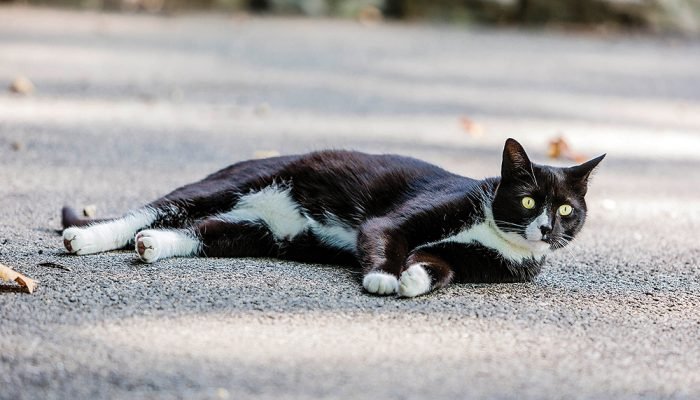
What is a feral cat?
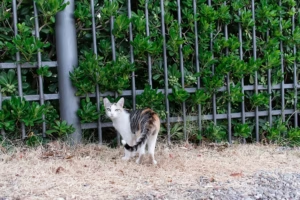
A feral cat is a term used to describe a community cat that is undomesticated. “Feral” describes a behavior a cat expresses when it is not used to people or feels frightened. It is virtually impossible to differentiate whether a frightened cat was born without human contact, formerly had human contact and became un-socialized from living on its own, or if it is simply frightened. Free-roaming cats are called Community Cats and the term feral simply describes a behavior a community cat may convey.
What can I do about feral cats?
We are fortunate to live in an area where many people care about the plight of feral cats. There are humane options.
Read about community cats and receive TNR information at Alley Cat Allies and Best Friends Animal Society.
A Trap, Neuter and Return (TNR) program benefits both community cats and the community by:
-
Stabilizing the colony and reducing the intake numbers at area shelters of community cats and kittens
-
Reducing offensive behaviors associated with unsterilized cats such as mating, fighting, yowling, and marking behaviors
-
TNR is more effective and less costly than repeated attempts at eradication
-
TNR is the humane approach to community cat overpopulation
Before you place that first trap, know as much as possible about the process. By educating yourself and being an informed trapper or colony caretaker, you will make a more positive impact on the cats you want to help.
Identify all cats in the area you wish to trap in if possible. Note those that are regulars, occasional visitors, pregnant females and kittens.
Assess the area the cats are being trapped and its suitability for return of the cats. Most usually it is best to return the cats to the area they were trapped. Make relocation a last consideration. There is a complete process to relocation and it must be done as a last resort only.
Notify neighbors that you will be trapping in the area. Ask that they keep their cat indoors at these times or ensure their pet has identification.
Before trapping, make arrangements for social cats and kittens to be adopted through a rescue organization, a no-kill shelter, or your own network if at all possible.
Ensure your veterinarian will work with you on community cats and that he and his staff are experienced in caring for them. Ensure that your veterinarian has the proper equipment or can arrange for those items to be available (netting and manhandling community cats are not recommended). Educate yourself and ask about the anesthesia protocol that will be used. Alternatively, use an experienced low-cost spay/neuter clinic.
Dissolvable sutures should be used on community cats, and a left ear tip is mandatory (it is the universal sign of a community cat). A rabies vaccination is also mandatory.
There are local programs available through the Austin Humane Society and Williamson County Regional Animal Shelter for TNR services in Austin and surrounding areas. Check with them directly for current programs.
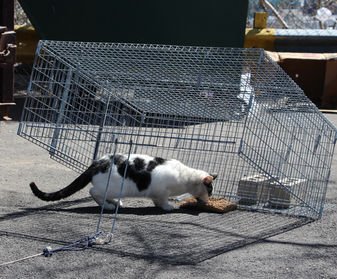
Cats should rarely be relocated. They already have a home – right where they are. If you remove them, new cats will move in within months. It is much better to sterilize them so they are not breeding and their numbers over time will attrite to a much smaller stable population.
If you decide to relocate your feral cats, the first rule is, DON’T.
However, if you decide to re-home to a barn placement or the like, read all you can about the relocation process at Alley Cat Allies. There is a specific process to this that should be followed fully to ensure the cat bonds to this area and stays.
There should always be a food and water source for them and a safe shelter (barn, outbuildings, etc). Please read, search, and review this information and the links provided to help ensure a successful relocation – Relocation – The Last Resort.
Austin Humane Society Feral Cat Spa/Neuter Program
There is currently a $25 fee per cat for those trapped outside of Travis County. This AHS program focuses on Austin/Travis County, so please contact them for out-of-county availability and check for changes to this pricing. Payment will be due at the time of intake for surgery. Appointments are strongly encouraged for all trappers. To use the program follow the steps here.